McIntosh Marketing Blog

David Ogilvy on Selling Tips and Closing the Sale

When I say his name, unfortunately not too many people have heard of this legendary giant of advertising.

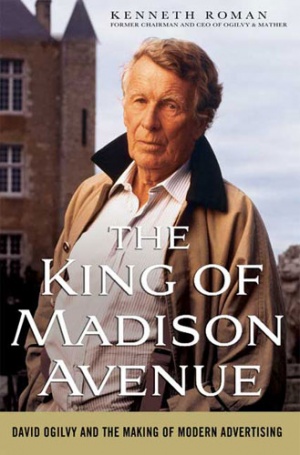
He has often been called, “The Father of Advertising.”  In 1962, Time called David Ogilvy, “the most sought-after wizard in today’s advertising industry.”  Author Kenneth Roman wrote a book about David Ogilvy titled, “The King Of Madison Avenue.” There is no doubt that David Ogilvy still shapes contemporary thought on the practices of advertising and selling even to this day.

While the methods have dramatically changed over time, the basic philosophy has not. Some things about Man himself are timeless. David Ogilvy intuitively knew this better than most people. And because of that, David Ogilvy shaped and developed his craft to near scientific results.

David Ogilvy was not only brilliant and pragmatic in the arts of advertising, marketing and selling, but he also made it his life’s effort to educate others. He believed that individuals and companies could be better served if they were to engage in advertising properly. For a successful company meant jobs, increased productivity, higher sales and earnings and thus a better way of life. He truly served as a business coach, way before the term was coined.

Ogilvy’s advertising philosophy followed these four basic principles:

  • Research: Maturing as he did from a background in research, David never underestimated its importance in advertising. In fact, in 1952, when he opened his own agency, David billed himself as research director.
  • Professional discipline: “I prefer the discipline of knowledge to the anarchy of ignorance.” David codified knowledge into slide and film presentations he called Magic Lanterns. He also instituted several training programs for young advertising professionals.
  • Creative brilliance: David had a strong emphasis on the “BIG IDEA.”
  • Results for clients: “In the modern world of business, it is useless to be a creative, original thinker unless you can also sell what you create.”

Here is a video from David Ogilvy. may you listen, learn and in some way find a better way to bring about more prosperity for your company, your family and yourself.

Read more »

Tags: , , , , , , , , , , , , , , ,

Cost Effective Methods of Conducting Market Research

It has been a long known that precise market research is the heart and soul of successful marketing. Without research, you are not only going at your online efforts utterly blindfolded, but also wasting your valuable funds. Moreover, you will see much less ROI from your marketing dollar.

The problem with most start ups, small and medium businesses, and innovative entrepreneurs is the lack of time and finance to spend with a professional market research company. Limited budgets and a slight desperation to get money in the door on an immediate basis can be a major road block that most companies never overcome. It is for sure that long-term success never comes about from short cuts.

Here is a small list of cost effective methods that you can implement to gain some fairly rapid insight on how to generate a better, more rapid ROI with your marketing dollar:

1. Study those who are successful.

Intrinsic to their success was doing something right. Apple did not invent the computer, but they have the found a better way to sell them. You will be amazed at how accessible successful people are through books, blogs and workshops. Those who are passionate and successful are also those who love to share and give back to those people who are truly striving to make a success out of themselves.

2. Study those who have already purchased from you.

I am still amazed on how many successful people who have thousands upon thousands of past clients in their files and lists, yet have never conducted any type of survey as to why they purchased from them or what reasons they have for buying more. I had one client who had a multi-million dollar business who could not tell me what her typical client was like. We then listed her top 50 clients and studied not only what type of business they were, but how they were originally procured and sold and the bright ideas started to ignite. Once we determined what market was generating most of her income, it became simple to determine what similar markets to target in future marketing efforts.

3. Study “Heavy Users.”

I bet you that 10% of your clientele comprises 30% or more of your revenue. This is true of almost all industries or businesses. What drives any business is a core group of clientele that spend much more than the others. Imagine targeting “heavy users” as a consolidated marketing campaign.  You will drive in more ROI and profits with less effort.

4. Talk to people, ask lots of questions and have your ideas challenged.

You can do this informally, through emails and even by conducting a focus group. If you intend on selling life insurance, then one would know through industry journals who are the typical clientele. But go beyond just numerical demographics. Talk to people personally that fit into that category. Walk around neighborhoods or attend conferences where these type of people frequent or do business. Real market research is about getting your hands dirty, rubbing elbows with those who are involved, discovering how they feel and even listening and noting the phrases and buzz words that they use.

5. Learn the basics on market research.

It is not as hard as you think. Become a student versus an ignorant victim.

Read more »

Tags: , , , , , , , , , ,